
Entra en el baño del lobby de cierto hotel boutique en España y notarás algo silenciosamente extraordinario: una pila de cerámica artesanal, con el borde cubierto de una caligrafía azul fluida que enumera los nombres de los pueblos cercanos: Villajoyosa, Callosa, Finestrat… cada letra pintada a mano por un artesano local. Sin logo corporativo. Sin porcelana estándar. Solo un pequeño guiño profundamente personal al lugar donde realmente estás.
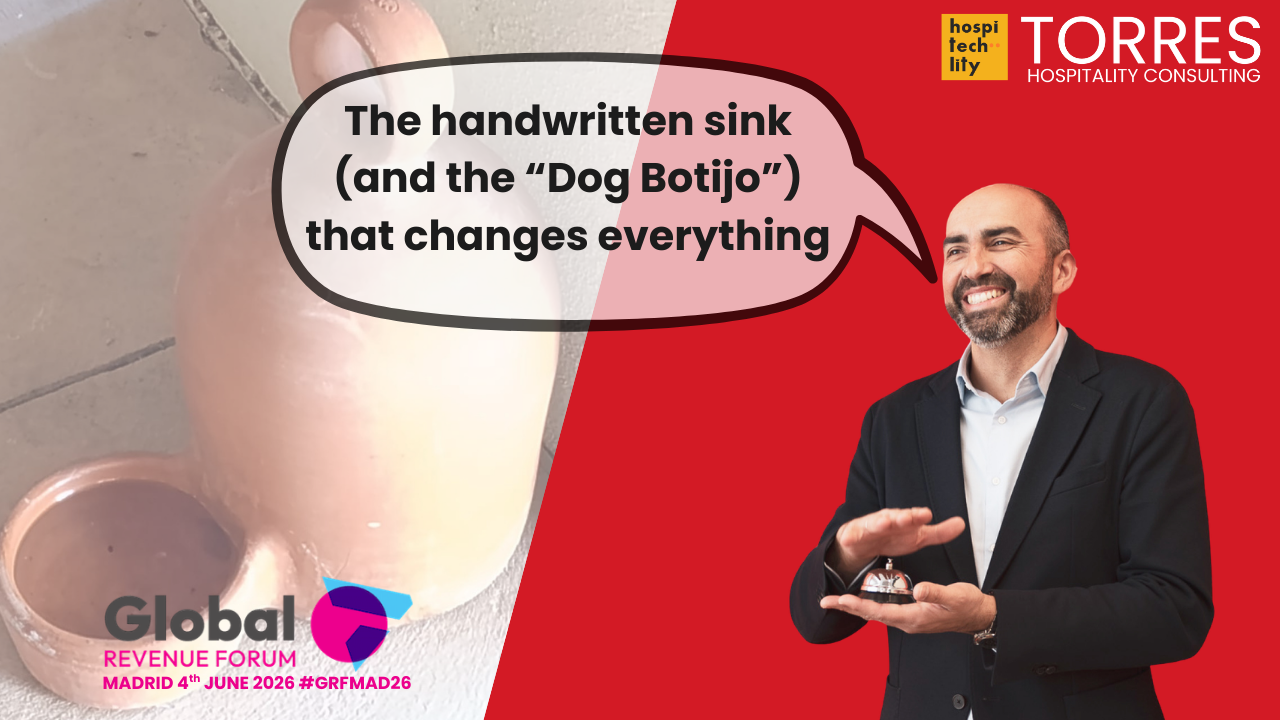
Unos pasos más allá, fuera en el patio, hay otra sorpresa: un «botijo» de barro tradicional (el icónico jarro de cerámica español que antes usaban los agricultores para mantener el agua fresca) reconvertido con cariño en una fuente de agua fresca para perros. Del mismo alfarero local, con el mismo tono ocre cálido, ahora al servicio de los huéspedes de cuatro patas con la misma artesanía cuidada.
Estos no son gestos de diseño caros. Son decisiones deliberadas que dicen: «No estás en un hotel más. Estás en un sitio real.»
Y en 2026, ese mensaje vale oro.
Los viajeros ya no se conforman con habitaciones idénticas, amenities estandarizados a nivel global y «recomendaciones locales» genéricas impresas en una tarjeta. Quieren conexión. Quieren sentir el destino en los detalles. Según informes recientes del sector, el 72% de los viajeros prefiere ahora gastar dinero en experiencias locales genuinas antes que en turismo tradicional. Buscan una inmersión hiperlocal: talleres artesanales, rituales de barrio y estancias que se sientan tejidas dentro de la comunidad en lugar de sobrepuestas encima de ella.
Los números son claros: el viaje auténtico y anclado en el lugar se ha convertido en el deseo dominante entre millennials, Gen Z e incluso viajeros mayores que buscan significado por encima de las etiquetas de lujo. «Vivir como un local» no es una tendencia. Es la expectativa.
Los grandes grupos hoteleros están reescribiendo el manual en silencio
Durante décadas, las cadenas globales construyeron imperios sobre Procedimientos Operativos Estándar (SOP) estrictos: el mismo champú, la misma cama, el mismo buffet de desayuno en todas partes, de Madrid a Miami. Esa consistencia construyó confianza y programas de fidelización masivos. Pero también creó uniformidad.
Ahora los gigantes responden con una estrategia más inteligente: las soft brands y las colecciones de hoteles independientes.
Estas nuevas «colecciones» dejan que las propiedades conserven su alma mientras toman prestados el motor de reservas, los puntos de fidelización y la fuerza de ventas global de la cadena. Sin SOP globales rígidos dictando cada detalle. Los propietarios y operadores obtienen libertad para celebrar la cultura local, contratar artesanos regionales y diseñar experiencias que no podrían existir en ningún otro sitio.
Algunos ejemplos:
– Hilton lanzó su Outset Collection a finales de 2025 específicamente para hoteles independientes upscale con «una fuerte identidad local»; la octava marca lifestyle de su portfolio.
– IHG lanzó la premium Noted Collection (su marca número 21) y su Vignette Collection crece con rapidez hacia las 100 propiedades, dando a los propietarios independientes libertad para conservar su carácter único.
– Marriott sigue expandiendo Autograph, Tribute Portfolio y nuevas colecciones que celebran propiedades «únicas en su especie».
– Accor sumó las colecciones Handwritten y Emblems, reportando un crecimiento del 25% en su segmento de soft brands.
– En conjunto, la oferta de habitaciones bajo soft brand ha crecido casi 10 veces más rápido que las habitaciones de marca tradicional en los últimos años.
En resumen: los grandes jugadores de hospitality se han dado cuenta de que el futuro son hoteles más distintivos, respaldados por escala global.
Los hoteles independientes siempre han tenido esta ventaja. Ahora incluso las propiedades de marca están siendo animadas (y a veces incentivadas) a soltar las riendas corporativas y dejar que brillen las historias locales.
Cómo cualquier hotel puede empezar a abrazar la cultura local hoy
No necesitas un presupuesto de renovación de 50.000 € para crear la misma magia que ese lavabo escrito a mano. Empieza pequeño, mantente auténtico:
1. Alíate con artesanos locales: encarga a un artesano por hotel una pieza propia: una pila de cerámica, azulejos personalizados, lámparas de lobby, incluso uniformes del personal con textiles regionales. Los huéspedes recuerdan la historia detrás del objeto.
2. Reutiliza con respeto: convierte objetos de patrimonio en amenities modernos (el bebedero para perros hecho con un botijo es genial: práctico, cultural, digno de Instagram e inclusivo para los dueños de mascotas).
3. Deja que el huésped toque el lugar: notas de bienvenida escritas a mano con recomendaciones locales. Menús con productores hiperlocales. Experiencias co-creadas con artistas, agricultores o historiadores de la zona.
4. Cuenta la historia en todas partes: códigos QR que enlazan a vídeos cortos del alfarero que hizo el lavabo. Personal formado para compartir una anécdota local personal en cada interacción.
5. Llévalo más allá del edificio: apoya proyectos comunitarios, compra F&B en local, ofrece itinerarios de «vive como un local» que ninguna OTA vende.
El resultado es medible: puntuaciones de satisfacción del huésped más altas, reservas directas más fuertes (la gente vuelve a «su» sitio), poder de fijación de precios premium y contenido auténtico para redes sociales que ningún equipo de marketing podría fabricar.