
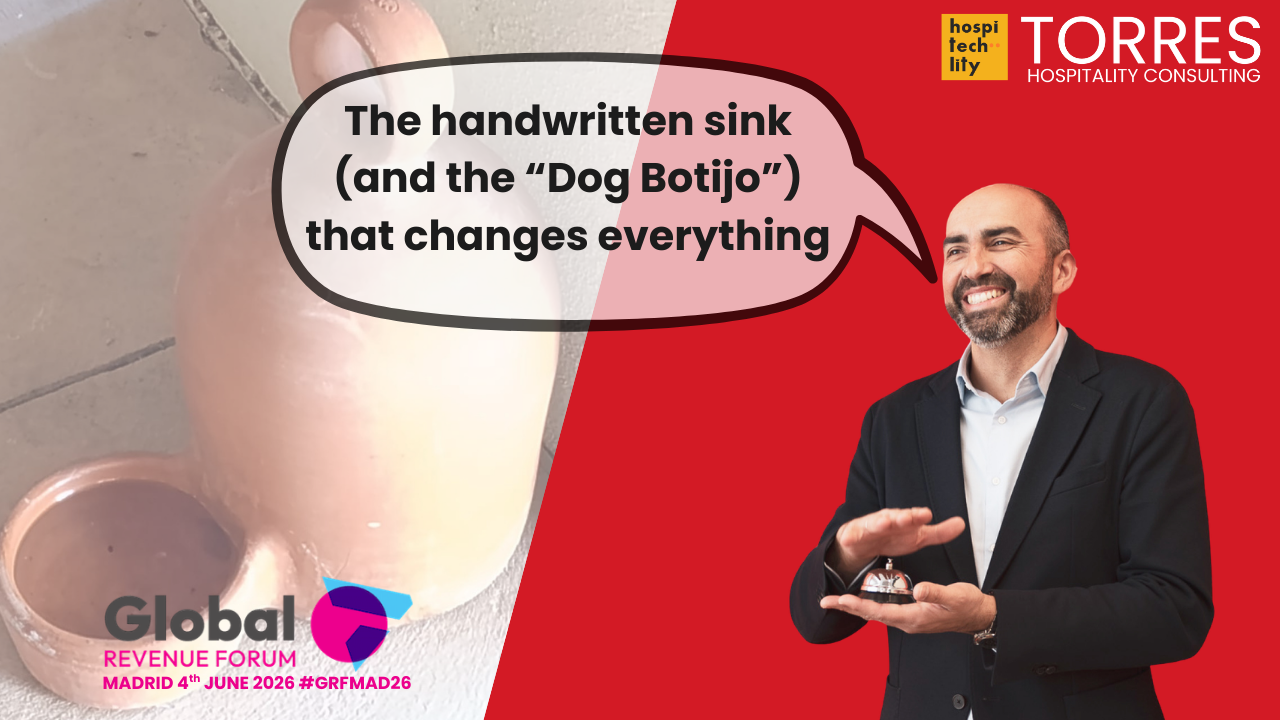
Step into the lobby bathroom of a certain boutique hotel in Spain and you'll notice something quietly extraordinary: a handcrafted ceramic sink, its rim covered in flowing blue calligraphy listing the names of nearby towns: Villajoyosa, Callosa, Finestrat… each letter hand-painted by a local artisan. No corporate logo. No standard porcelain. Just a small, deeply personal nod to the place you're actually in.
A few steps further on, out in the courtyard, there's another surprise: a traditional clay "botijo" (the iconic Spanish ceramic jug once used by farmers to keep water cool) lovingly repurposed as a fresh water fountain for dogs. Made by the same local potter, with the same warm ochre hue, it now serves our four-legged guests with the same meticulous craftsmanship.
These aren't expensive design flourishes. They're deliberate choices that say, "You're not just in a hotel. You're in a real place."
And in 2026, that message is worth its weight in gold.
Travelers are no longer satisfied with identical rooms, globally standardized amenities, and generic "local recommendations" printed on a card. They want connection. They want to experience the destination in the details. According to recent industry reports, 72% of travelers now prefer to spend money on genuine local experiences rather than traditional tourism. They seek hyperlocal immersion: artisan workshops, neighborhood rituals, and stays that feel woven into the community rather than superimposed on it.
The numbers are clear: authentic, place-based travel has become the dominant desire among millennials, Gen Z, and even older travelers seeking meaning beyond luxury labels. “Living like a local” isn’t a trend. It’s the expectation.
The major hotel groups are quietly rewriting the rulebook
For decades, global chains built empires on strict Standard Operating Procedures (SOPs): the same shampoo, the same bed, the same breakfast buffet everywhere, from Madrid to Miami. That consistency built trust and massive loyalty programs. But it also created uniformity.
Now the giants are responding with a smarter strategy: soft brands and collections of independent hotels.
These new "collections" allow properties to retain their unique character while leveraging the chain's booking engine, loyalty points, and global sales force. Without rigid global Standard Operating Procedures (SOPs) dictating every detail, owners and operators gain the freedom to celebrate local culture, engage regional artisans, and design experiences that couldn't exist anywhere else.
Some examples:
– Hilton launched its Outset Collection in late 2025 specifically for upscale independent hotels with "a strong local identity"; the eighth lifestyle brand in its portfolio.
– IHG launched the premium Noted Collection (its 21st brand) and its Vignette Collection is rapidly growing towards 100 properties, giving independent owners the freedom to retain their unique character.
– Marriott continues to expand Autograph, Tribute Portfolio and new collections that celebrate "one-of-a-kind" properties.
– Accor added the Handwritten and Emblems collections, reporting a growth of 25% in its soft brands segment.
– Overall, the supply of rooms under soft branding has grown almost 10 times faster than traditional branded rooms in recent years.
In summary: the big players in hospitality have realized that the future lies in more distinctive hotels, backed by global scale.
Independent hotels have always had this advantage. Now even branded properties are being encouraged (and sometimes incentivized) to loosen the corporate reins and let local stories shine.
How any hotel can start embracing local culture today
You don't need a €50,000 renovation budget to create the same magic as that handwritten sink. Start small, stay authentic.
1. Partner with local artisans: commission a unique piece from each hotel artisan—a ceramic sink, custom tiles, lobby lamps, even staff uniforms made with regional textiles. Guests remember the story behind the object.
2. Reuse with respect: turn heritage objects into modern amenities (the dog waterer made from a clay water jug is great: practical, cultural, Instagram-worthy and inclusive for pet owners).
3. Let the guest experience the place: handwritten welcome notes with local recommendations. Menus featuring hyper-local producers. Experiences co-created with local artists, farmers, or historians.
4. Tell the story everywhere: QR codes link to short videos of the potter who made the sink. Staff trained to share a personal local anecdote with every interaction.
5. Take it beyond the building: support community projects, buy F&B locally, offer "live like a local" itineraries that no OTA sells.
The result is measurable: higher guest satisfaction scores, stronger direct bookings (people return to "their" site), premium pricing power, and authentic social media content that no marketing team could manufacture.