


El sector de hospitality y turismo en España enfrenta un reto de talento persistente que socava su competitividad a largo plazo, a pesar de cifras récord de visitantes y de su contribución económica (más del 13% del PIB en los últimos años). Mientras la industria crea millones de empleos, lucha con una alta rotación, un desajuste de competencias, una baja percepción de progresión profesional y dificultades para atraer y retener a profesionales cualificados, especialmente al talento joven que se incorpora al mercado laboral.
Los datos recientes destacan los problemas centrales: los salarios medios en hospitality y turismo se mantienen significativamente por debajo de la media nacional. Informes de 2025-2026 indican unos ingresos mensuales del sector en torno a 1.700-1.800 € brutos (que se traducen en unos 21.000 € anuales en muchos puestos), con un 95% de los trabajadores del sector ganando por debajo de la mediana nacional. Incluso para los graduados universitarios en campos relacionados con turismo, los puestos de entrada y de nivel medio a menudo no cumplen las expectativas, lo que lleva a la frustración y a la salida hacia otros sectores.
Las tasas de inserción parecen sólidas en la superficie (entre un 70-75% de los graduados de turismo encuentra trabajo en seis meses, y más del 90% en un año), pero la calidad se queda corta. Solo alrededor del 20% de estos graduados acaba en puestos que realmente requieren una cualificación universitaria. La mayoría ocupa posiciones operativas (recepción, F&B, roles de servicio básico) que podrían cubrirse eficazmente con formación profesional. Este desajuste alimenta el subempleo, los contratos de temporada y una percepción generalizada de precariedad, contribuyendo a la escasez crónica de personal en temporada alta y al alto absentismo.
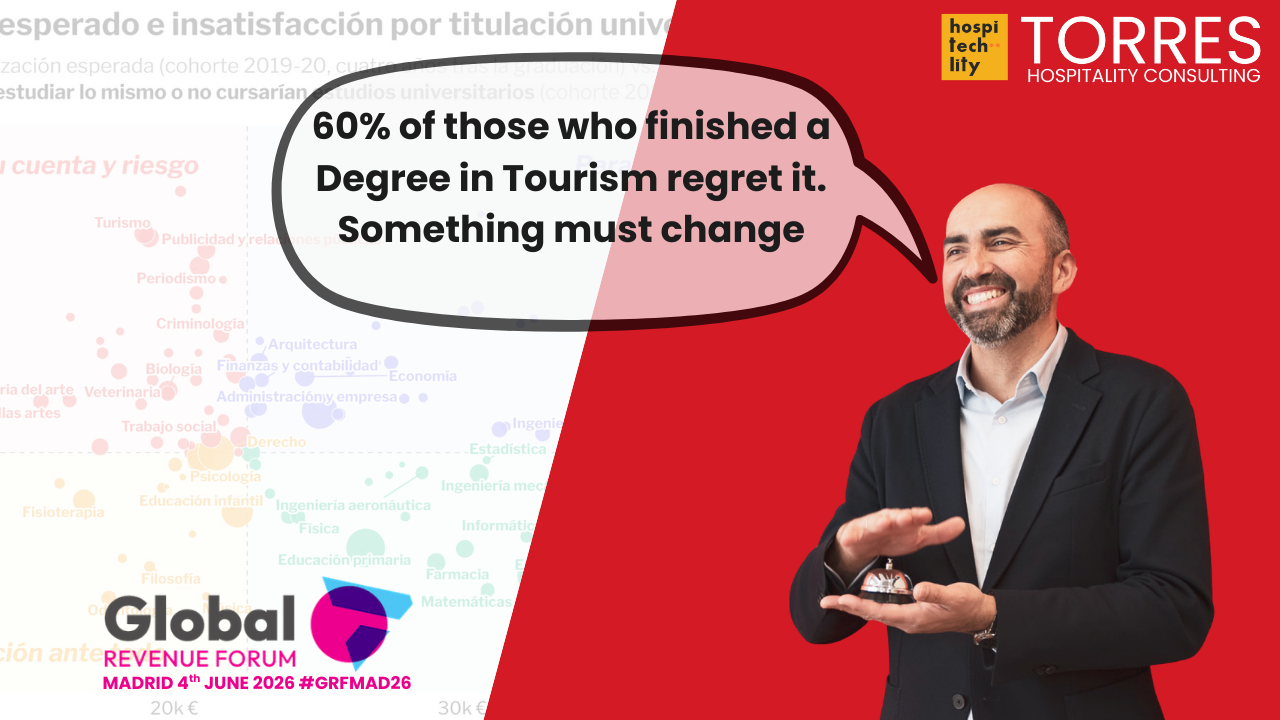
Las causas de fondo van más allá del salario: movilidad ascendente limitada, turnos exigentes, inestabilidad estacional y una brecha entre la preparación académica y las necesidades reales (como herramientas digitales, toma de decisiones basada en datos, prácticas de sostenibilidad e innovación en la experiencia del cliente). En una era de rápida evolución del traveltech (piensa en personalización con IA, sistemas de revenue management, algoritmos de pricing dinámico y operaciones sin contacto), el tradicional grado universitario de cuatro años en turismo a menudo se queda corto a la hora de ofrecer competencias de alto valor inmediatamente aplicables. Y el hecho de que el 60% de quienes terminaron esos estudios se arrepienta debería ser motivo suficiente para reconsiderar cómo se están haciendo las cosas.
Soluciones prácticas: avanzar hacia una formación especializada, más corta y más dirigida
Para romper este ciclo, el sector debe priorizar una educación ágil y orientada a resultados por encima de programas generalistas largos. Estos son los enfoques clave que están ganando tracción:
1. La Formación Profesional (FP) como vía de entrada principal
Los ciclos de FP de Grado Superior ofrecen programas de 2 años con un fuerte enfoque práctico, prácticas obligatorias y una alineación directa con las necesidades de los empleadores. Estas vías ofrecen una entrada más rápida al mercado laboral, un mejor encaje inicial en el puesto y a menudo una mayor empleabilidad inmediata en roles operativos y de nivel medio. Muchos graduados de FP consiguen posiciones rápidamente y construyen una experiencia que abre puertas a la especialización más adelante. Los empleadores valoran cada vez más estos perfiles por su preparación práctica y sus menores costes de formación.
2. Bootcamps cortos y especializados, y certificaciones en nichos de alta demanda
El segmento que más rápido crece son los cursos modulares e intensivos (de 3 a 12 meses) centrados en competencias de traveltech y digitales. Algunos ejemplos:
– Revenue management y analítica de pricing
– Herramientas de datos (Power BI, Google Analytics para métricas de turismo)
– IA y personalización en hospitality
Iniciativas como las alianzas entre industria y academia ofrecen formación práctica en plataformas reales y proyectos en vivo. Esto proporciona un reciclaje rápido tanto para quienes entran de nuevo como para profesionales de carrera media que cambian de rumbo.
3. Modelos híbridos: grados universitarios + complementos dirigidos
Para quienes cursan estudios universitarios, combinar un grado relacionado (por ejemplo, ADE, Informática o Estadística) con micro-credenciales o prácticas específicas de hospitality. Esto crea profesionales «en forma de T»: una base amplia de conocimiento general más una experiencia profunda en tecnología/hospitality. Los roles de traveltech (analistas de datos en OTAs, desarrolladores de motores de reserva o especialistas en IA para experiencia del huésped) obtienen salarios a menudo entre un 50% y un 100% más altos que las vías tradicionales de turismo, con mucha mayor satisfacción y retención.
4. Formación liderada por el empleador y aprendizaje continuo
Las cadenas, las startups y las empresas de TravelTech deberían invertir en academias internas, programas de aprendices y desarrollo continuo. Ofrecer escaleras de carrera claras (por ejemplo, de primera línea a revenue manager en 3-5 años), beneficios competitivos (ayuda de vivienda en destinos de alto coste, turnos flexibles) y programas de reconocimiento para reconstruir la marca empleadora del sector.
La oportunidad es clara: al adoptar vías más cortas y especializadas (especialmente FP y certificaciones centradas en tecnología) el sector puede atraer talento motivado que se queda más tiempo, rinde mejor e impulsa la innovación. Los graduados y profesionales ganan expectativas realistas, un retorno más rápido de su inversión educativa y un crecimiento profesional genuino. En un mercado global competitivo, ganarán quienes formen de forma más inteligente, no más larga.
Para responsables de RR. HH., educadores, estudiantes y familias en hospi-tech-lity (sí, el juego de palabras es intencionado): replanteaos la vía por defecto de cuatro años. Priorizad las competencias prácticas y a prueba de futuro. Los datos muestran que el modelo actual no está generando satisfacción ni prosperidad amplias. Es hora de virar hacia formatos que encajen con el ritmo y las necesidades reales de la industria.
Si estás pensando «deberíamos estar haciendo esto en nuestro hotel», no estás solo. Ayudo a marcas de hospitality como la tuya a pasar de las ideas a la implementación. ¿Quieres explorar cómo impulsar tu ancillary revenue con estrategias a medida?
Escríbeme: https://torreshospitalityconsulting.com/ ¡Gracias!