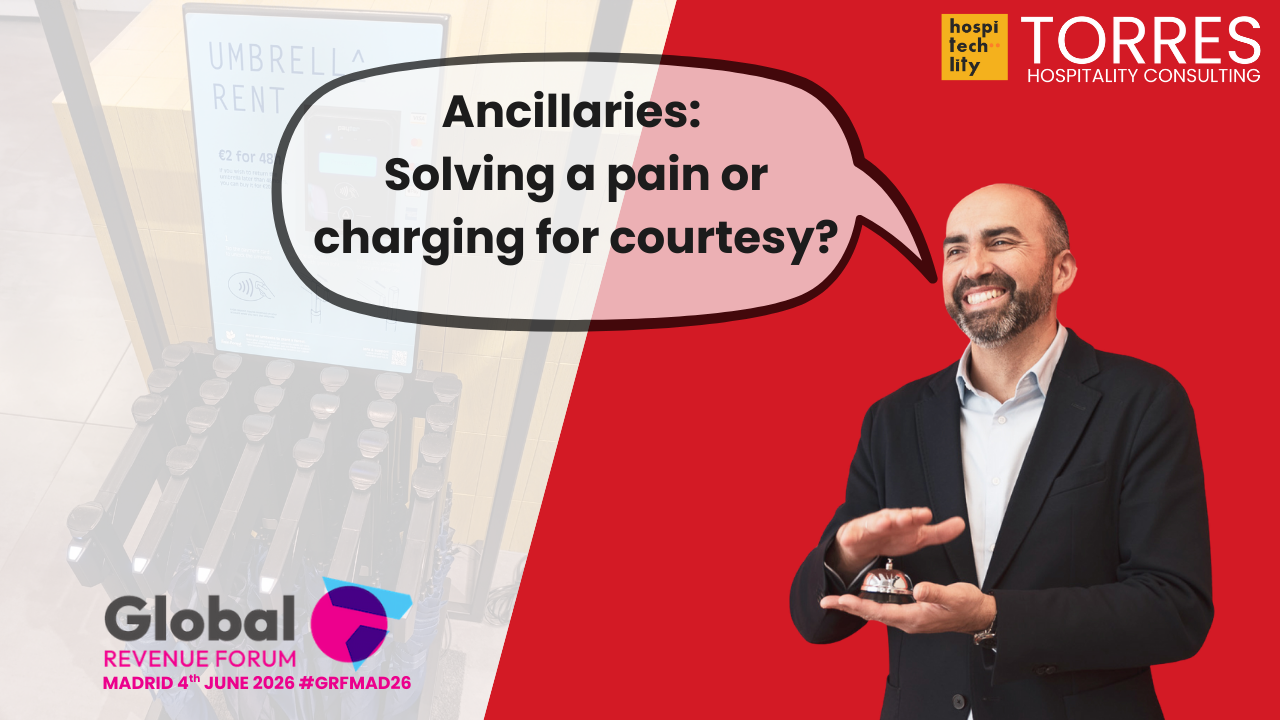
El ancillary revenue solía ser sencillo: desayuno, parking, upgrades. Fácil de explicar, fácil de justificar.
Hoy, el ancillary está evolucionando hacia algo más sofisticado (y a veces más controvertido): microproductos incrustados en el journey, diseñados para monetizar la certeza, la comodidad, la velocidad y la reducción de riesgo; a menudo en un solo toque.
Esta semana me encontré con dos ejemplos que enmarcan perfectamente el debate:
Las OTA convirtiendo la incidencia de equipaje en un add-on de checkout. Hoteles experimentando con cobrar por lo que muchos consideran una cortesía (los paraguas).
Se parecen («otra tasa más»), pero en realidad son dos modelos distintos de ancillary moderno: monetizar el riesgo frente a monetizar los momentos de hospitalidad.
Caso 1: vender tranquilidad en el checkout (OTAs + incidencias de equipaje)
Un artículo que circulaba por Yahoo Finance describía cómo las OTA están integrando productos de «incidencia de equipaje» en el flujo de reserva. Una opción que puedes añadir en el checkout, que promete un pago garantizado si el equipaje facturado no llega dentro de una ventana de tiempo definida (habitualmente 96 horas).
Por qué importa: esto no es solo un producto extra. Es una nueva categoría de ancillary (monetización del riesgo, igual que el seguro de viaje), y a las OTA les encanta por tres razones:
Es fácil de vender. Un escenario claro de «qué pasa si» + un resultado claro convierte bien en el checkout. Nadie quiere leer condiciones de un seguro a mitad de una reserva.
Es de alto margen y bajísima fricción operativa para el vendedor. La entrega del servicio se traslada a un partner, mientras la OTA se queda con el flujo de reserva y la oportunidad de attachment.
Convierte la disrupción en ingreso. Y ahí es donde aparece la línea ética: el huésped aceptará pagar por tranquilidad… hasta el punto en que sienta que nos estamos lucrando de sistemas que fallan.
Caso 2: cuando una cortesía se convierte en una transacción (alquiler de paraguas en hoteles)
El segundo ejemplo viene de una experiencia personal reciente en un hotel de Ámsterdam. La publicación en LinkedIn (más de 15.000 visualizaciones y más de 100 interacciones) demuestra que es un tema sensible: un alquiler automatizado de paraguas donde pasas tu tarjeta y pagas 2 € por 48 horas (aproximadamente la duración media de una estancia), y si te lo quedas, son 20 €.
Los comentarios fueron exactamente los que cabría esperar, y ahí está la clave. El paraguas no es solo un producto; es un momento de marca:
Las voces del lujo dijeron «esto no va: simplemente prestadlo» (o como mucho, gestionadlo con notas en el PMS / lógica de depósito).
Los operadores lifestyle/premium señalaron que puede funcionar cuando encaja con las expectativas y es sin fricción.
Otros lo replantearon como sostenibilidad: menos paraguas baratos comprados y tirados, más compartir, menos residuo.
También circula por los círculos de hospitality un modelo más amplio de «paraguas como servicio»: pagas una pequeña cuota por 48h, lo devuelves a través de un sistema con seguimiento, y el producto está diseñado para durar (a veces con un gancho de sostenibilidad como plantar un árbol).
Por qué importa: este es el otro lado de la evolución del ancillary: monetizar las microcomodidades.
Y las microcomodidades son peligrosas si tocan el «ADN de la hospitalidad». El cerebro del huésped no juzga un paraguas como juzga los snacks del minibar. Lo juzga como cuidado.
Si se siente como ayuda → el huésped sonríe. Si se siente como monetizar la cortesía → el huésped lo recuerda (y no de forma positiva).
Entonces… ¿hasta dónde va a llegar el ancillary?
Más lejos de lo que la mayoría de los equipos cree; y no solo en volumen, sino en filosofía:
De «extras» → a microproductos. De «servicios adicionales» → a certeza, velocidad y protección frente al riesgo. De «upsell en recepción» → a un checkout automatizado, incrustado, de un solo clic.
Los ganadores no serán los hoteles o marcas que cobren por más cosas. Serán los que elijan los momentos correctos para monetizar sin dañar la confianza.
El test de la línea del ancillary (3 preguntas)
Antes de lanzar cualquier nuevo add-on de pago, yo aplicaría este filtro rápido:
¿El intercambio de valor es obvio en 5 segundos? Si el huésped necesita un párrafo, comprarás quejas junto con tu ingreso.
¿Reduce la fricción o crea fricción? La automatización puede ser un regalo… o una interacción fría si sustituye al cuidado.
¿Está alineado con la promesa de nuestro segmento? El lujo vende «cuidado sin esfuerzo». El lifestyle puede vender «comodidad de pago por uso». Mismo producto, percepción totalmente distinta.
3 acciones para esta semana
Audita tus «momentos de cortesía». Lista 10 pequeños artículos/servicios que regalas actualmente (paraguas, agua, adaptadores, acceso al gimnasio, late checkout «a veces»). Decide cuáles definen la marca (mantenlos gratis), cuáles son costosos (modelo de depósito) y cuáles pueden monetizarse sin dañar la percepción.
Construye un dashboard sencillo de «tasa de attachment vs tasa de queja». Cada ancillary debería medirse más allá del ingreso: % de attachment, margen, reembolsos y señales de queja/sentimiento. Si no puedes medir el lado negativo, solo verás el positivo… hasta que sea demasiado tarde.
Mueve un ancillary aguas arriba, pero de forma ética. Elige un único add-on que resuelva genuinamente un punto de dolor y prueba a ofrecerlo antes en el journey (pre-llegada, motor de reservas, app). Precio transparente, valor claro, compra en un clic.