



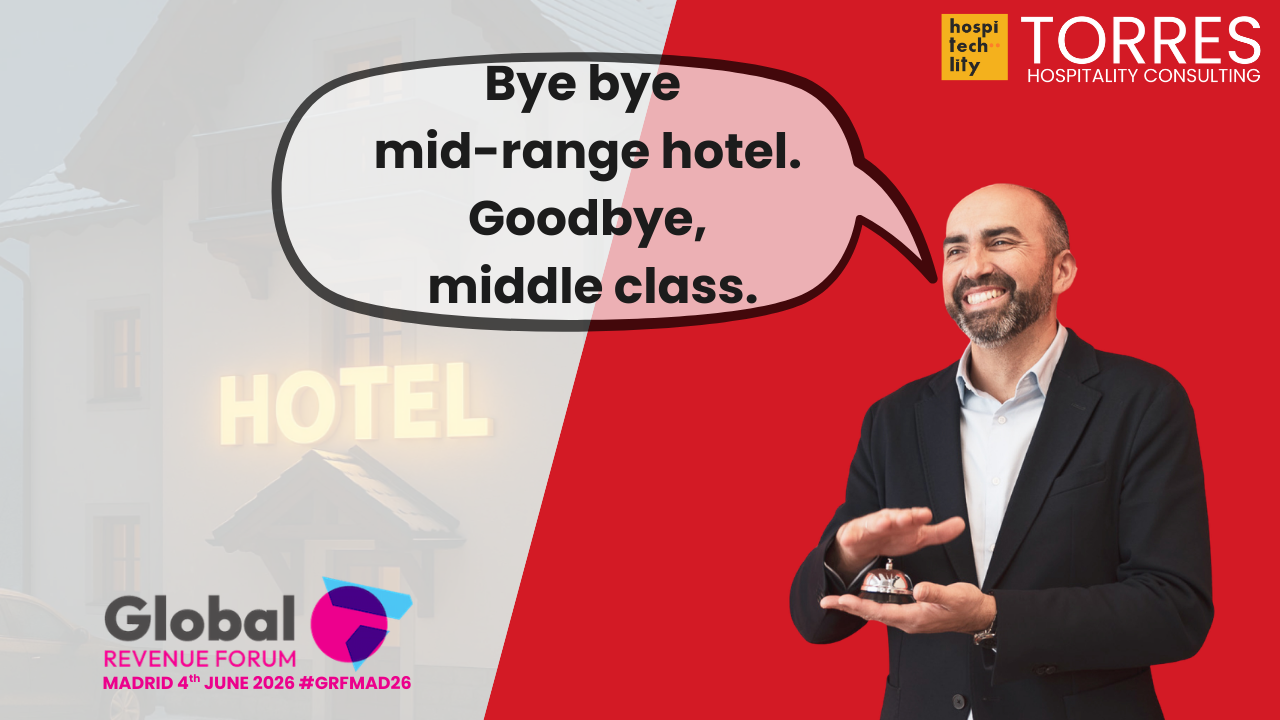
En los últimos años, una verdad sencilla se ha vuelto más difícil de ignorar: la experiencia de viaje de la clase media se está estrechando. Un artículo reciente de Washington Post sobre viajes lo enmarca de una forma que cualquier hotelero reconocerá: la «habitación de 150 dólares» es cada vez más difícil de encontrar en los lugares y marcas donde antes existía.
El artículo señala un cambio medible en el pricing hotelero de EE. UU. (parecido a lo que ha estado pasando en muchos otros destinos). La tarifa media diaria subió de 131,56 dólares en 2019 a 160,49 dólares en 2025, y los grandes mercados están muy por encima de esa media nacional (Nueva York citada en 333,81 dólares, Boston 232,51 dólares, Miami 224,24 dólares). El huésped se adapta bajando de categoría, alejándose más, acortando el viaje o «dándose un capricho» a regañadientes solo para conseguir algo aceptable.
Aquí es donde mi teoría de la «clase media que desaparece» se vuelve práctica para hospitality. No va solo de tramos de ingresos. Va del espacio que desaparece entre «asequible y decente» y «barato pero arriesgado». El artículo capta esa tensión con viajeros que se sienten forzados a una elección binaria: pagar mucho más de lo planeado, o aceptar compromisos de calidad o ubicación que antes no eran necesarios. Y resuena profundamente porque es algo que llevo un tiempo señalando.
La demanda se polariza
Cuando la clase media se adelgaza, la demanda hotelera se vuelve más polarizada.
En un extremo, los viajeros premium y de lujo siguen viajando, porque su sensibilidad al precio es menor. En el otro extremo, los viajeros de valor siguen viajando, pero bajan de categoría de forma agresiva, aceptan desplazamientos más largos o reducen la duración del viaje. El segmento que sufre la presión es aquel sobre el que se construyeron muchos portfolios: el midscale y upper-midscale que antes se sentía como «valor inteligente».
Incluso cuando las tarifas están «por debajo de la inflación» en términos reales, el huésped sigue sintiendo el dolor porque está pagando más dinero en efectivo por lo que se siente como la misma habitación; y a veces con cargos añadidos encima. Ese vacío psicológico es donde crece la insatisfacción, y donde se erosiona la confianza en la marca.
La «narrativa de valor» se rompe. El riesgo oculto de hospitality
Hospitality no compite solo en precio. Compite en equidad percibida.
Cuando un huésped cree: «estoy pagando más pero recibiendo lo mismo», la historia se convierte en: «los hoteles se están aprovechando». Esa historia se extiende más rápido que cualquier informe STR. Y cambia el comportamiento: estancias más cortas, menos extras, más caza de ofertas, más consideración de alojamiento alternativo y más sesgo hacia reseñas negativas.
Esto también está ocurriendo en un contexto de inflación más amplio donde los consumidores todavía sienten la presión de precios en categorías cotidianas, manteniendo la sensibilidad alta incluso cuando la inflación general se enfría.
Entonces, ¿qué se supone que debo hacer?
La respuesta no es «descontar hasta que vuelva la clase media». La respuesta es reconstruir esa clase media a través de la claridad, el diseño de producto y la comunicación.
Si al huésped de clase media se le obliga a gastar más, exigirá una de dos cosas: confianza o control. Confianza significa fundamentos visiblemente mejores (limpieza, calidad del sueño, desayuno, WiFi, un parking sin complicaciones). Control significa elección modular (solo habitación frente a paquetes, tarifas transparentes, escaleras de upsell claras, y una fidelización que entregue ahorros reales sin trampas).
Aquí es donde el revenue management deja de tratarse solo de fijar la tarifa «correcta» y pasa a tratarse de diseñar una oferta que se sienta defendible. Porque en un mercado polarizado, tu precio puede ser correcto y aun así ser rechazado si la narrativa de valor es débil.
La «habitación de 150 dólares» puede estar desapareciendo. La pregunta más grande es si hospitality está dispuesta a diseñar (y explicar) cómo debería ser la nueva clase media.