
Los hoteles no instalan kioscos de check-in porque odien a las personas.
Los instalan porque muchas tareas del check-in son repetitivas, predecibles y fáciles de automatizar: confirmar la identidad, cobrar, asignar habitación, entregar la llave, imprimir información, procesar el checkout.
Un kiosco puede hacer eso rápido, sin cansarse, sin necesitar un descanso y sin hacer esperar innecesariamente al huésped. McKinsey ha destacado ejemplos de hoteles que usan kioscos de self-check-in que permiten a los huéspedes hacer el check-in o el checkout en menos de 30 segundos.
Así que la pregunta no es si los kioscos se volverán más comunes.
Lo harán.
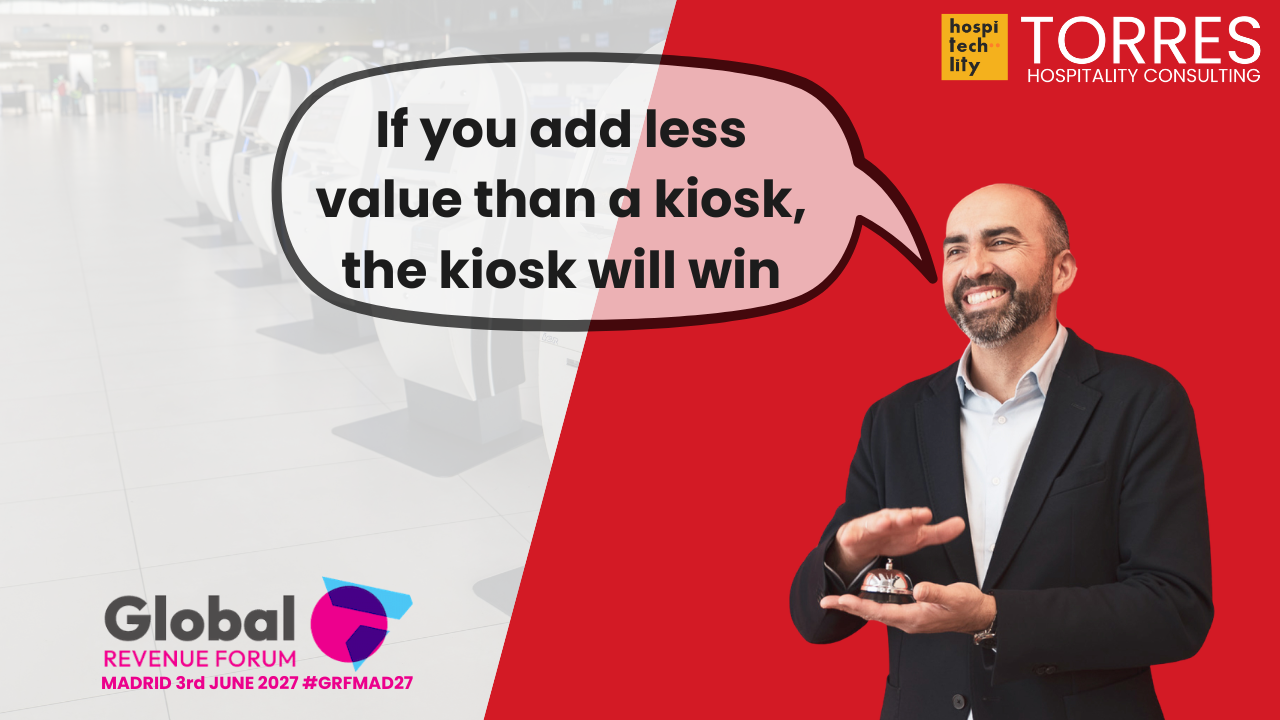
La pregunta real es: ¿qué debería hacer una persona en el check-in que un kiosco no pueda hacer?
La persona no puede ser solo un kiosco más lento
Si el recepcionista solo pide el pasaporte, confirma la reserva, entrega la llave y dice «el desayuno es de 7 a 10», tenemos un problema.
Eso no es hospitalidad. Eso es administración.
Y la administración es exactamente lo que la tecnología sabe sustituir bien.
La persona en recepción necesita dejar de competir con el kiosco en velocidad y empezar a competir en valor. El kiosco debería encargarse de la transacción. La persona debería encargarse de la relación.
Eso significa leer al huésped, entender el contexto, detectar oportunidades, resolver fricciones y hacer que la llegada se sienta mejor de lo que podría hacerla sentir una pantalla.
Del check-in al momento comercial
La llegada es uno de los momentos de ingreso más importantes del guest journey.
El huésped está físicamente presente. Está atento. Está pensando en su estancia. Está abierto a la información si es relevante.
Aquí es donde un buen equipo de recepción puede generar ingreso sin sonar como un vendedor.
Un kiosco puede ofrecer un upgrade de habitación.
Una persona formada puede explicar por qué ese upgrade tiene sentido para ese huésped en concreto.
Un kiosco puede mostrar disponibilidad de spa.
Una persona puede decir: «Se queda dos noches, y mañana el spa estará más tranquilo. Si quiere un descanso de verdad, ese sería el mejor momento.»
Un kiosco puede mostrar las opciones del restaurante.
Una persona puede decir: «Esta noche la terraza está preciosa, y si le gusta el pescado local, yo reservaría cuanto antes.»
Esa es la diferencia.
No empujar.
Guiar.
El recepcionista como conector de revenue
La recepción no debería verse solo como un rol operativo. Debería ser un conector de revenue.
Un buen recepcionista puede identificar a huéspedes que llegan cansados y reducir la fricción. Puede detectar a una pareja que está celebrando algo y sugerir la experiencia adecuada. Puede reconocer a una familia que necesita comodidad y recomendar extras prácticos. Puede detectar a un viajero de negocios que valora la rapidez, el silencio y la flexibilidad.
Esto requiere formación, no guiones.
Los guiones hacen que la gente suene robótica. Y si hacemos que la gente suene robótica, no deberíamos sorprendernos cuando los robots la sustituyan.
El objetivo es dar al equipo la confianza para tener mejores conversaciones.
¿Qué le trae por aquí? ¿Es su primera vez en el destino? ¿Ya tiene planes para cenar? ¿Le gustaría que le ayudásemos a aprovechar al máximo la estancia? ¿Busca más relax, descubrimiento o comodidad?
Estas preguntas crean contexto. El contexto crea relevancia. La relevancia crea conversión.
Lo que las personas deben hacer mejor
Para seguir siendo valiosa, la experiencia humana del check-in necesita centrarse en cinco cosas.
Primero, inteligencia emocional. Un kiosco no puede leer bien la frustración, el cansancio, la confusión, la ilusión o la duda. Una persona sí.
Segundo, prevención de problemas. Un buen recepcionista puede anticipar incidencias antes de que se conviertan en quejas: ubicación de la habitación, horarios, transporte, disponibilidad del restaurante, peticiones especiales.
Tercero, personalización. No la personalización falsa del «estimado huésped», sino una personalización útil basada en el motivo de la estancia.
Cuarto, conciencia de revenue. Cada miembro del equipo debería entender el valor comercial de los upgrades, el F&B, el spa, el parking, el late checkout, las experiencias y la educación sobre la reserva directa.
Quinto, memoria de marca. Puede que el huésped no recuerde el PMS, el codificador de llaves o el formulario de check-in. Pero puede recordar a la persona que hizo que la llegada fuera fácil, cálida y útil.
La tecnología debería quitarse la parte aburrida
El mejor uso de la tecnología no es eliminar la hospitalidad. Es quitar las tareas aburridas y de bajo valor para que las personas puedan centrarse en lo que realmente importa.
Que el kiosco escanee el pasaporte.
Que el huésped pague digitalmente.
Que el sistema entregue la llave.
Y que la persona cree el momento.
Porque si la tecnología hace el proceso más rápido y la persona hace la experiencia mejor, todos ganan.
Gana el huésped.
Gana el equipo.
Gana el hotel.
Pero si la persona solo repite lo que el kiosco ya hace, el caso de negocio queda muy claro. El kiosco será más barato, más rápido y más consistente.
Eso es incómodo, pero es cierto.
El verdadero futuro de la recepción
El futuro de la recepción no es «personas o kioscos».
Es tareas rutinarias para la tecnología, momentos de valor para las personas.
Los hoteles que entiendan esto no solo reducirán las colas. Mejorarán la conversión, aumentarán el ingreso ancillary, elevarán la satisfacción del huésped y harán a sus equipos más relevantes.
En Torres Hospitality Consulting ayudamos a los hoteles a conectar operaciones, experiencia del huésped, tecnología y revenue en estrategias prácticas que tienen sentido de negocio.
Porque el objetivo no es sustituir a las personas por máquinas.
El objetivo es hacer que las personas sean demasiado valiosas como para sustituirlas.
TORRES HOSPITALITY CONSULTING