



The hospitality and tourism sector in Spain faces a persistent talent challenge that undermines its long-term competitiveness, despite record visitor numbers and its economic contribution (more than 13% of GDP in recent years). While the industry creates millions of jobs, it struggles with high turnover, a skills mismatch, a low perception of career progression, and difficulties attracting and retaining qualified professionals, especially young talent entering the workforce.
Recent data highlights the core problems: average salaries in hospitality and tourism remain significantly below the national average. Reports for 2025-2026 indicate monthly earnings in the sector of around €1,700-€1,800 gross (translating to approximately €21,000 annually for many positions), with 95% of workers in the sector earning below the national median. Even for university graduates in tourism-related fields, entry-level and mid-level positions often fall short of expectations, leading to frustration and a move to other sectors.
Employment rates appear robust on the surface (between 70% and 75% of tourism graduates find work within six months, and over 90% within a year), but the quality falls short. Only around 20% of these graduates end up in positions that actually require a university qualification. The majority occupy operational roles (reception, food and beverage, basic service roles) that could be effectively filled with vocational training. This mismatch fuels underemployment, seasonal contracts, and a widespread perception of job insecurity, contributing to chronic staff shortages during peak season and high absenteeism.
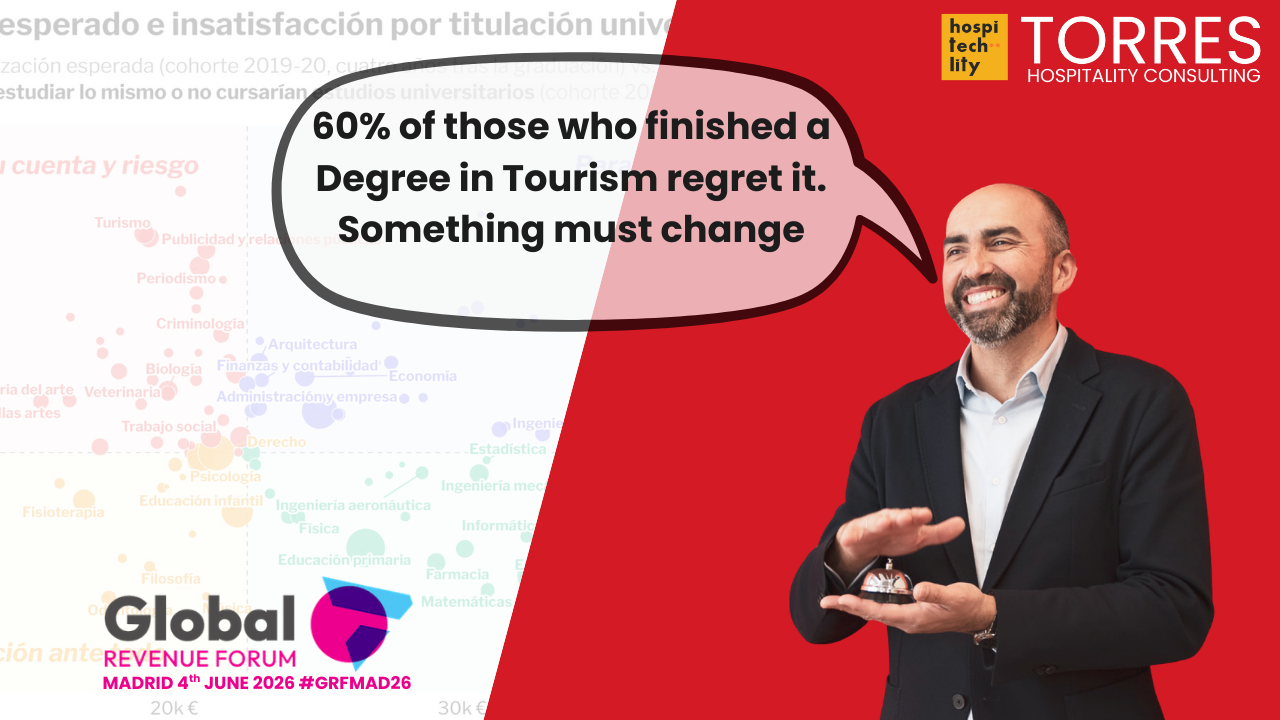
The underlying causes go beyond salary: limited upward mobility, demanding shifts, seasonal instability, and a gap between academic preparation and real-world needs (such as digital tools, data-driven decision-making, sustainability practices, and customer experience innovation). In an era of rapidly evolving traveltech (think AI-powered personalization, revenue management systems, dynamic pricing algorithms, and contactless operations), the traditional four-year university degree in tourism often falls short in delivering immediately applicable, high-value skills. And the fact that 60% graduates regret it should be reason enough to reconsider how things are being done.
Practical solutions: move towards specialized, shorter and more targeted training
To break this cycle, the sector must prioritize agile, results-oriented education over lengthy, generalist programs. These are the key approaches that are gaining traction:
1. Vocational Training (VT) as the main entry route
Advanced Vocational Training (FP) programs offer two-year courses with a strong practical focus, mandatory internships, and direct alignment with employer needs. These pathways provide faster entry into the job market, a better initial job fit, and often greater immediate employability in operational and mid-level roles. Many FP graduates quickly secure positions and build experience that opens doors to specialization later on. Employers increasingly value these profiles for their practical training and lower training costs.
2. Short, specialized bootcamps and certifications in high-demand niches
The fastest-growing segment is modular and intensive courses (3 to 12 months) focused on traveltech and digital skills. Some examples:
– Revenue management and pricing analytics
– Data tools (Power BI, Google Analytics for tourism metrics)
– AI and personalization in hospitality
Initiatives such as industry-academia partnerships offer hands-on training on real-world platforms and live projects. This provides rapid retraining for both new entrants and mid-career professionals looking to change career paths.
3. Hybrid models: university degrees + targeted supplements
For those pursuing university studies, combining a related degree (e.g., Business Administration, Computer Science, or Statistics) with specific hospitality micro-credentials or internships creates "T-shaped" professionals: a broad base of general knowledge plus in-depth expertise in technology/hospitality. Traveltech roles (data analysts at OTAs, booking engine developers, or AI specialists for guest experience) often command salaries 501 to 1,001 times higher than traditional tourism career paths, with significantly greater employee satisfaction and retention.
4. Employer-led training and continuous learning
Hotel chains, startups, and TravelTech companies should invest in in-house academies, apprenticeship programs, and continuous development. They should offer clear career paths (e.g., from frontline to revenue manager in 3-5 years), competitive benefits (housing assistance in high-cost destinations, flexible shifts), and recognition programs to rebuild the industry's employer brand.
The opportunity is clear: by adopting shorter, more specialized pathways (especially vocational training and technology-focused certifications), the sector can attract motivated talent that stays longer, performs better, and drives innovation. Graduates and professionals gain realistic expectations, a faster return on their educational investment, and genuine career growth. In a competitive global market, those who provide smarter training, not longer training, will win.
For HR professionals, educators, students, and families in the hospi-tech-lity (yes, the pun is intentional): rethink the default four-year pathway. Prioritize future-proof, practical skills. Data shows the current model isn't delivering widespread satisfaction or prosperity. It's time to shift to formats that align with the industry's current pace and needs.
If you're thinking, "We should be doing this at our hotel," you're not alone. I help hospitality brands like yours move from ideas to implementation. Want to explore how to boost your ancillary revenue with tailored strategies?
Write to me: https://torreshospitalityconsulting.com/ Thank you!