

The other day I ordered a coffee at a restaurant.
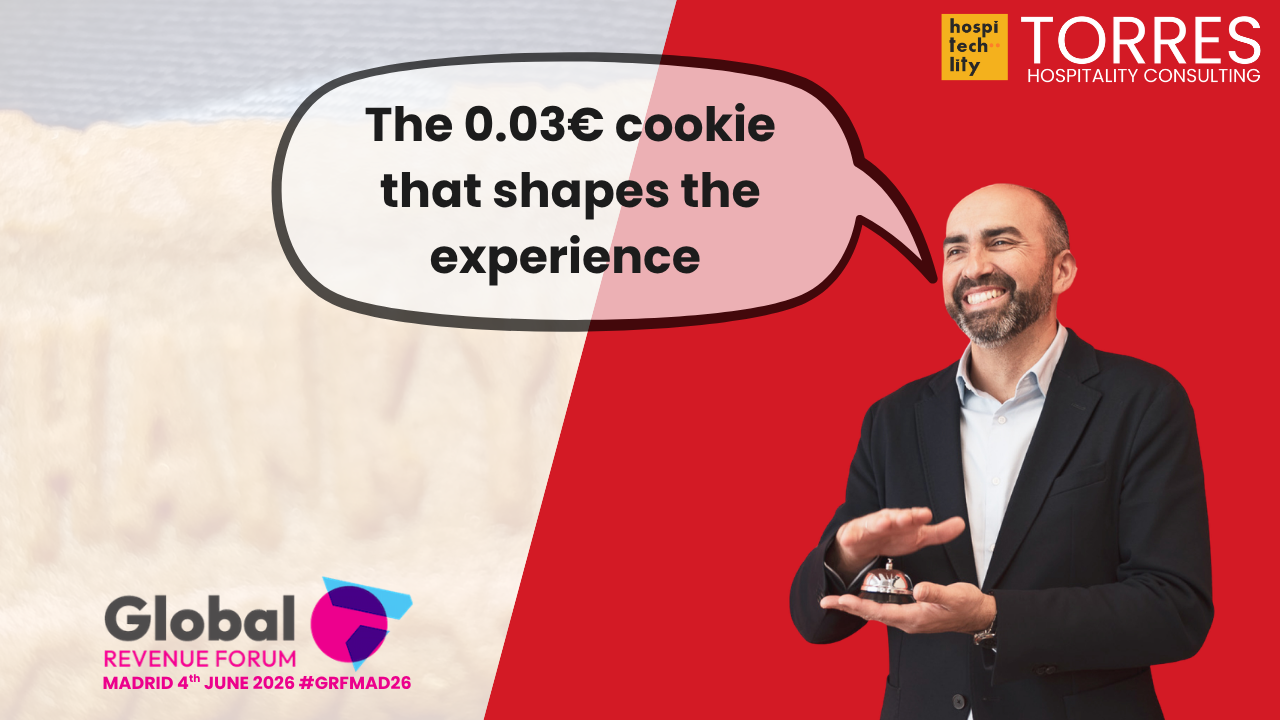
Nothing special. Just a long coffee. But when it arrived, something caught my eye: a small, wrapped cookie placed next to the cup. The wrapper was covered with the word "Thank you" in dozens of languages: Romanian, Swahili, Japanese, Spanish. And when I unwrapped it, the cookie itself had "THANK YOU" printed on it.
Nobody asked for this. Nobody was charged extra for it. It was a €0.03 cookie.
And yet, I photographed her. I'm writing about her now. And I'll remember that coffee.
The details that no one notices… until they do.
Will Guidara, former co-owner of Eleven Madison Park (once ranked the world's best restaurant), built his entire philosophy around what he calls Unreasonable Hospitality: the deliberate act of giving people more than they expect, in ways they could not have anticipated.
In his book of the same name, Guidara describes how he would send an employee to buy a hot dog from a street vendor because a group of tourists had mentioned in passing that they hadn't yet tried a New York-style hot dog. The hot dog cost $2. The memory it created? Priceless. The loyalty it fostered? Measurable.
The principle applies directly to hotels. But most revenue strategies completely ignore it.
Why this matters for the Ancillary Revenue
The dominant model in the hotel ancillary sector remains transactional: push an upsell offer, convert it, count the euros. Early check-in, room upgrade, late check-out… all packaged in an automated email sent 48 hours before arrival.
It works. It's real money. But it leaves a bigger opportunity untouched.
Because the cookie wasn't an upsell. It was a sign: we see you, we appreciate you, and we thought of you (dear customer, not me, Pablo, I know you understand) before you even arrived. That sign is what makes a guest say yes to the upgrade the next time; not because they were offered a discount, but because they already trust the hotel's judgment.
Emotional micro-moments drive willingness to pay. A 2023 study from Cornell's Center for Hospitality Research found that perceived personalization (even when objectively minor) significantly increases the propensity to spend. The cookie is personalization made tangible.
Three things your hotel can do this week
1. Audit your "zero-cost touches." What does a guest notice that shows thoughtfulness without appearing on any line item of the profit and loss statement? Handwritten welcome notes. The way the turndown is handled. A seasonal touch on the coffee tray. Map these moments; you probably have fewer than you think.
2. Connect the emotion with the offer. The moment a guest feels something (a compliment at reception, a surprise touch, unexpected views) is the ideal moment to introduce an upsell. Not through automation. Through a person.
3. Train your team in the sequence: Unreasonable Hospitality → Trust → Sales Conversation. Most FDU training programs skip the first step. They go straight to the offer. That's why conversion rates stagnate.
The inconvenient truth
Hotels spend thousands optimizing their upsell funnel. They test email subject lines, adjust offer windows, and A/B test room categories.
And they send those emails from a no-reply address.
A cookie that costs €0.03 can do more for your RevPAR than a sophisticated pre-arrival campaign, if delivered at the right time, by the right person, with the right intention.
The revenue opportunity in hospitality was never just about the offer. It was always about whether the guest wanted to give you more of their money.
Make him want to do it.
Want to explore how emotional touchpoints can improve your hotel's ancillary revenue strategy? Visittorreshospitalityconsulting.com or connect directly on LinkedIn.