



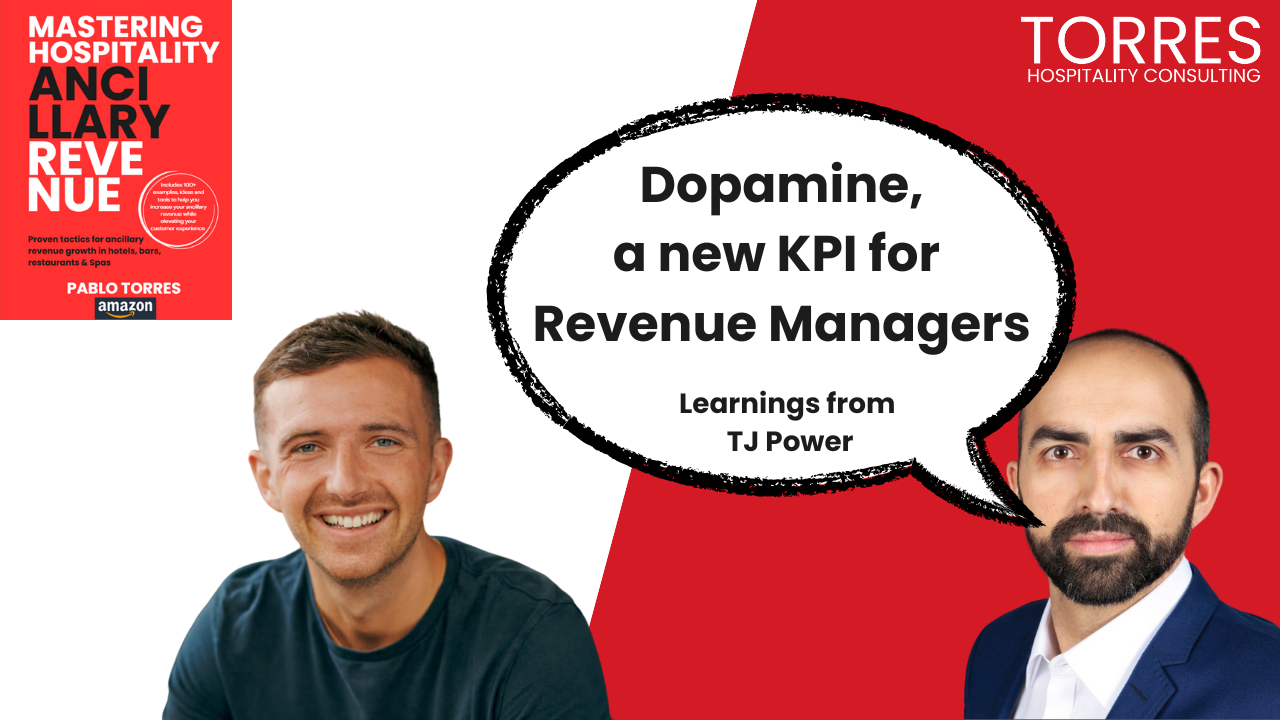
We often obsess over data, tools, and tactics, focusing on the next best system for dynamic pricing, the most accurate demand forecasts, or the latest pickup trends. But we rarely ask the deeper question: what drives the people behind the numbers? What fuels the consistency, creativity, and resilience required to navigate an increasingly volatile market? According to neuroscientist TJ Power, the answer is dopamine. So I believe it’s time we start treating it not as a buzzword but as a strategic lever for performance.
Dopamine is often misunderstood as a chemical linked to pleasure. In reality, it governs pursuit. It’s the engine behind focus, discipline, and goal-directed behavior, which are all essential qualities in a revenue professional. The key insight here is that dopamine isn’t released when we reach our goals; it’s released while we’re actively working towards them, especially when the task is effortful. That means our motivation is literally built through doing hard things, not by waiting for inspiration to strike. This has profound implications. Most of us start our day checking emails, glancing at STR reports, and jumping into calls. It feels productive, but it bypasses our brain’s need for effortful engagement to build motivation. Instead, what if we made it a rule to begin each morning with the task we’re least excited about? Say a detailed pickup analysis, reconciling a forecast, or reviewing underperforming segments? This shift may feel counterintuitive, but it aligns perfectly with our neurobiology: starting with difficulty actually raises our dopamine baseline for the entire day.
The second critical lesson is that our modern work environment is flooded with overstimulation. Constant pings, notifications, and digital distractions erode our dopamine supply, leaving us reactive, fatigued, and often unmotivated by midday. For revenue managers, whose success depends on deep analysis and strategic foresight, this is deadly. The solution isn’t quitting tech: it’s learning to cycle between deep, undistracted work and conscious rest. Blocking two 90-minute “focus blocks” a week, with all notifications silenced, can significantly enhance productivity and job satisfaction. This is when your best rate strategies emerge. Not during meetings or Slack threads.
Moreover, dopamine thrives on clarity of pursuit. Having a clear professional mission not only increases your intrinsic motivation but also protects you from the burnout that comes with operating in a purely reactive mode. Ask yourself: what are you truly chasing? It could be optimizing GOPPAR across multiple properties, leading a cross-functional revenue culture, or increasing spa revenue through integrated TRevPAR strategies. The more emotionally aligned and specific the goal, the more sustained your motivation becomes. It is about wiring your brain to pursue something that matters.
Environment also matters. A chaotic workspace subtly communicates overwhelm, which lowers dopamine. Conversely, a clean screen layout, a tidy desk, and one visual focus (be it your daily target dashboard or your pricing calendar) support clarity and discipline. Even small rituals, like tidying your desktop before logging off or starting your morning with a journal entry on yesterday’s pricing wins, act as psychological “dopamine primers.” They anchor your mind and make it easier to re-enter flow when the real work begins.
There’s also value in physical resets. Cold exposure, as surprising as it sounds, has been shown to increase dopamine levels by up to 250%. While not everyone has access to cold plunges, even ending your morning shower with 30 seconds of cold water or taking a brisk walk before work triggers a similar effect. This principle is especially useful before high-stakes tasks like budget presentations or rate negotiations. It gives your brain a natural edge without needing another coffee.
Perhaps most underrated is the practice of celebrating small wins. Many revenue managers, driven by perfectionism and comparison (especially in comp-set-heavy environments), focus primarily on what isn’t working. This stifles the dopamine system. Instead, make it a habit to note one specific achievement at the end of each day: a reoptimized segment that nudged ADR up 2%, a report simplified for the front office, a team member trained in RevPASH analysis. Micro-celebrations like this reinforce your brain’s link between effort and reward, making you more likely to stay motivated tomorrow.
Finally, none of this happens in isolation. While dopamine is about pursuit, oxytocin (the bonding chemical) amplifies motivation when the pursuit is shared. Revenue leaders can boost team engagement not through more meetings, but by framing the work as a shared mission: “How can we all contribute to reaching 80% spa treatment occupancy?” or “What’s everyone’s insight on increasing ancillary revenue per guest?” This isn’t fluff; it’s chemistry. Teams with aligned goals and shared ownership have higher neurochemical engagement, which translates directly into better collaboration, faster execution, and stronger results. In the end, the message is clear. Success in revenue management isn’t just about data literacy, system mastery, or analytical horsepower. It’s about how well we manage our inner world; how we handle distraction, reset motivation, build habits, and align with meaningful pursuits. The brain isn’t a soft skill. It’s the operating system behind every strategic decision, pricing move, or leadership gesture. If we can learn to work with it, not against it, our forecasts won’t just be accurate. They’ll be inspired.
This week, let’s go beyond the KPIs. Let’s build our neuro-performance. Turn effort into energy. Design focus into your calendar. And let your own biology become your competitive edge in an industry that rewards the sharpest minds and the most consistent execution.