



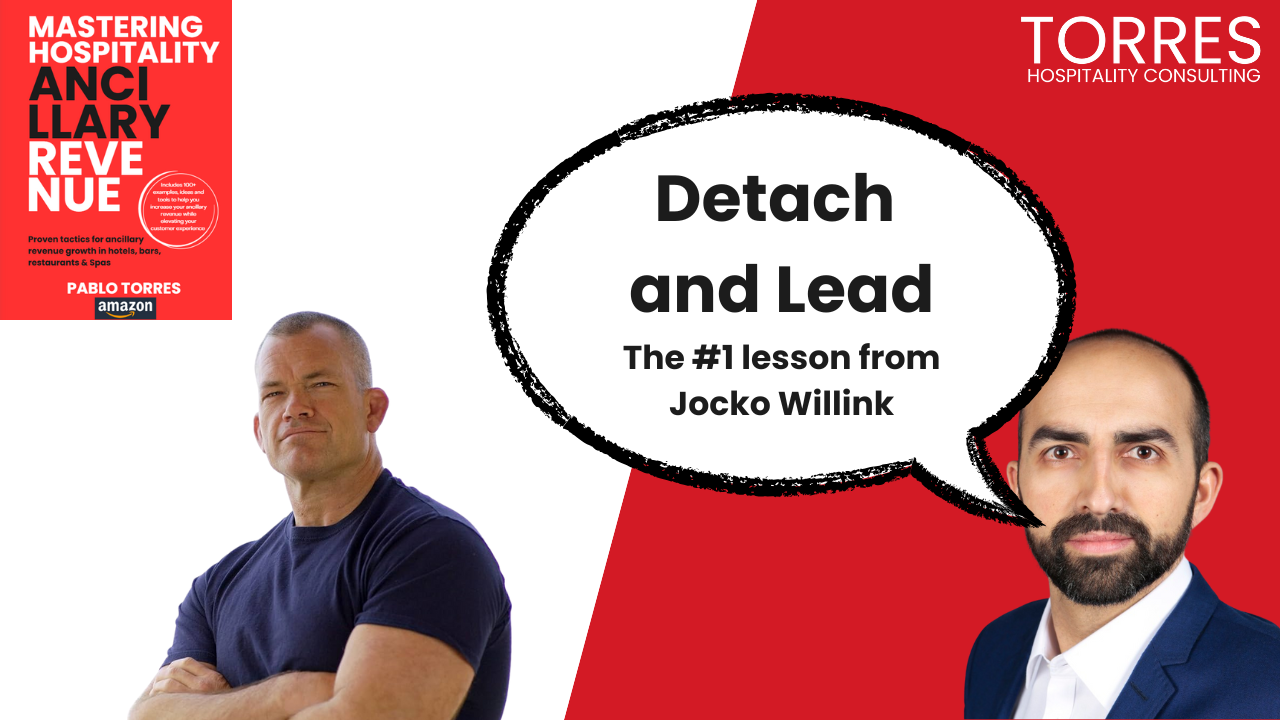
Jocko Willink is a Navy SEAL. A podcaster. A leadership guru. But at his core, he’s a master of control through detachment.
And in our industry, where emotions run high, teams are stretched thin, and leadership often means reacting rather than responding, his core message hits like a revelation:
«Step back. Detach. Observe. THEN lead.»
This is more than military advice. This is operational wisdom for hotel managers and revenue leaders alike.
The pressure is real: That’s why detachment matters
Whether it’s a complaint from a high-paying guest, a spa treatment schedule falling apart mid-shift, or tech systems going down during peak check-in, hospitality puts us in constant fight-or-flight.
And that’s when we usually make our worst decisions:
- We react emotionally to staff underperforming.
- We escalate conflicts with partners or vendors.
- We jump to conclusions on revenue dips without looking at holistic KPIs.
Jocko’s approach? Pause. Pull back. Zoom out.
It’s not apathy. It’s situational awareness. From that position, you can make smarter calls. Ones that benefit the team, the guest, and the business.
Detachment in action: What it looks like in Hospitality
Let’s bring this to ground level.
You’re a GM, and your Front Office manager just blew up at a guest.
Option 1 (reactive): You publicly correct them, making the tension worse, and later regret how it escalated.
Option 2 (detached): You take 10 seconds to assess. You note the guest’s volume, your manager’s tone, the context. You intervene calmly. De-escalate. Follow up privately.
The second version protects your team, your guest, and your brand.
That’s leadership. And it starts with detachment.
Same goes for data:
- Don’t obsess over daily dips in RevPAR without looking at TRevPSqm trends.
- Don’t blame low Spa’s GOPPATH on therapists without reviewing productivity tools or scheduling logic.
- Don’t assume your personal brand isn’t working because one post underperformed. Zoom out and look at reach, conversations, long-term positioning.
“Default: Aggressive” doesn’t mean reckless
Jocko also advocates for a mindset called “Default: Aggressive.” That doesn’t mean being hostile. It means acting proactively. Owning the mission. Refusing to freeze.
In hospitality, that’s:
- Addressing guest friction points before they reach TripAdvisor.
- Adopting direct sales marketing automation before OTAs squeeze more margin.
- Booking that panel talk or writing that LinkedIn post that scares you, because visibility matters.
But here’s the kicker: Aggression only works when paired with detachment. Otherwise, it’s just chaos.
The emotional discipline of Hospitality
Hospitality leaders aren’t short on stress. But often, what sets the great apart isn’t experience. It’s emotional discipline.
Jocko calls it a skill: the ability to stay calm while others lose their heads. You can train this. In fact, you must train this if you’re leading teams or handling guests.
Start with micro-practices:
- Take a breath before replying to that heated email.
- Walk the floor before responding to today’s P&L.
- Ask a clarifying question before assuming the worst.
Your calm becomes contagious. And in a world of burnout and turnover, calm leaders are the ones who retain teams and guests.
Lead from the balcony
Ronald Heifetz once said, “Great leaders move between the dance floor and the balcony.” Jocko would say: “Detach, then lead.”
Same idea.
So here’s your invitation as a hospitality pro:
- Step back from the operational rush.
- See the patterns: in your team, your guest behavior, your own leadership.
- And then step back in with precision, presence, and purpose.
Because hospitality isn’t just about service. It’s about command.
And those who lead with calm, win with clarity.