


One of the biggest mistakes in hospitality revenue strategy is believing that growth means attracting everyone.
More guests. More channels. More campaigns. More offers. More volume.
It sounds logical. But in practice, "everyone" is usually the most expensive customer segment you can pursue.
Because when you try to be good to everyone, you dilute your value proposition. You flatten your pricing power. You overcomplicate your operations. And you start competing in the worst possible market: the "who's cheapest today?" market.
Hospitality doesn't win there. True hospitality wins when it understands a simple truth:
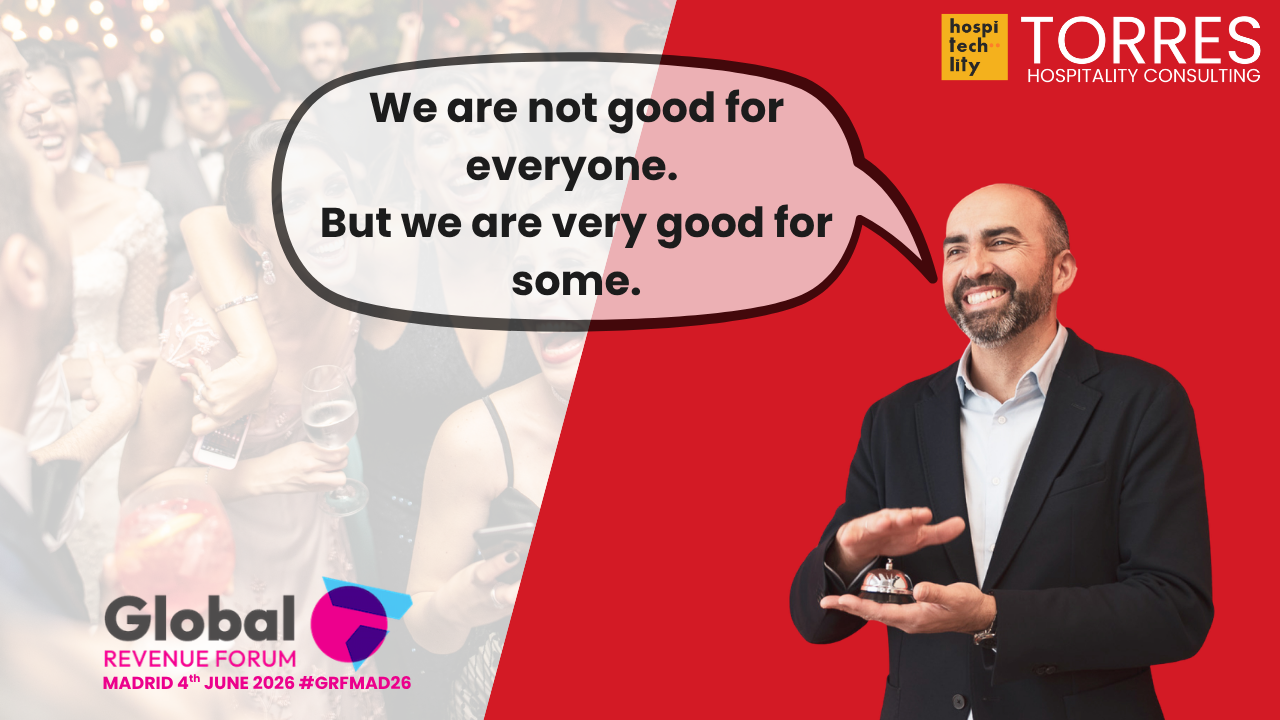
We're not good for everyone. But we're very good for some.
And those "some" are the customers who matter most.
These are the guests who understand our concept. The ones who value the experience, not just the bed. The ones who use the spa, book the restaurant, upgrade their room, return with their family, recommend us to their friends, and forgive minor imperfections because they feel an emotional connection to the brand.
Those aren't just customers. They're revenue partners.
In revenue management, we often talk about ADR, RevPAR, occupancy, conversion, travel, ancillary spending, and booking windows. All important. But sometimes we forget the human element behind the numbers.
A loyal guest isn't valuable just because they return. They're valuable because they reduce uncertainty.
It reduces acquisition costs. It increases lifetime value. Guests are less price-sensitive when the experience aligns with their expectations. They buy more than just the room. They trust us before they arrive, engage with us during their stay, and remember us after they leave.
This is where revenue strategy becomes relational.
Because the best revenue doesn't always come from selling more. Sometimes it comes from selling better to the right people.
A guest who books a low-rate room through a high-commission channel, doesn't spend money at the hotel, complains about every extra, and never returns might help occupancy today. But they could destroy profitability tomorrow.
Meanwhile, a guest who books directly, upgrades to a better room, books a spa treatment, dines at the hotel, and returns twice a year is a completely different business case.
Same room inventory, completely different revenue impact.
That's why segmentation isn't a spreadsheet exercise. It's a strategic decision about who we serve, how we serve them, and what kind of business we want to build.
The awkward part is this: saying yes to the right guest often requires saying no to the wrong one.
Not arrogantly. Not with a "we're too good for you" attitude. But in a focused way.
A family resort shouldn't design its entire experience around business travelers. A wellness hotel shouldn't become a party hotel just because one segment is temporarily filling rooms. A luxury property shouldn't destroy its positioning every off-season with aggressive discounts that attract guests who would never pay full price.
Revenue isn't just about capturing demand. It's about the quality of that demand. And quality demand is built on consistency.
When the right customers feel that the hotel was designed with them in mind, loyalty becomes natural. Not forced. Not manufactured with points. Not dependent on discounts.
They come back because the product is right for them. They come back because the team understands them.
They return because the experience makes sense.
That's when revenue becomes stronger: when the brand, operations, marketing, pricing, and distribution are all aligned around the same ideal guest.
So the question isn't, "How can we attract more people?" The better question is, "For which customers can we be exceptional?"
Once we know that, the revenue strategy becomes much clearer.
We know which channels deserve investment. Which packages make sense. Which ancillaries to promote. Which experiences to design. Which messages to communicate. Which guests to prioritize when demand is high.
And, equally important, which business to avoid. Because loyalty isn't built by trying to please everyone. Loyalty is built when a specific group of people feels, "This place understands me."
That's the sweet spot. Not maximum reach. Maximum relevance. And in hospitality, relevance means revenue.
At Torres Hospitality Consulting, we help hotels identify who their most valuable guests really are, build revenue strategies around them, and turn relevance into profitability.
Because the goal is not to be everything to everyone.
It's about becoming unforgettable to the right people.
Let's talk about how your hotel can grow revenue by serving guests who truly value what you do. Visittorreshospitalityconsulting.com or connect directly on LinkedIn.