


Imagine this.
You're checking out of your SmartRental in Madrid. The concierge has taken your luggage, called your taxi, and made your stay feel effortless. You reach for your wallet… and realize you don't have any cash.
The awkward moment every traveler knows.
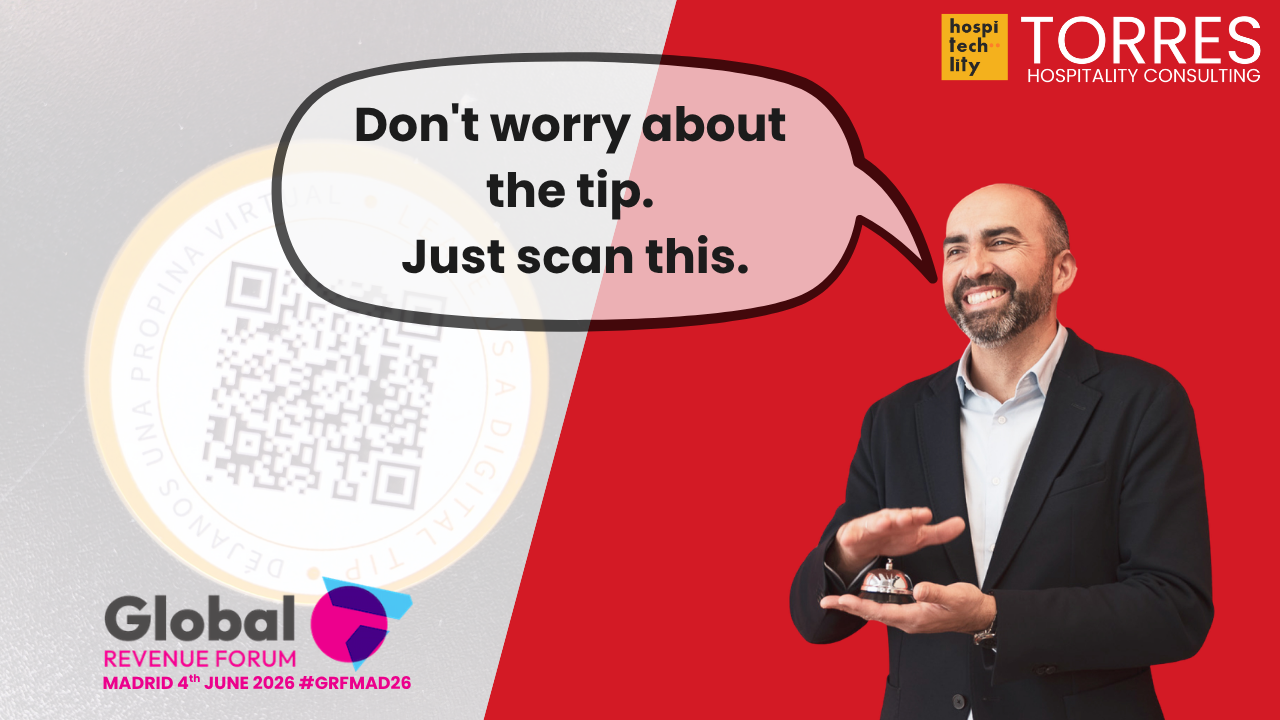
But instead of an awkward pause, the concierge smiles and says, "Don't worry about the tip. Just leave us a digital tip."
They give you a small circular badge with a QR code. You scan it. It takes you directly to Google Reviews.
Thirty seconds later, you've left five stars and written two lines about how helpful it was.
That sign cost the hotel no more than €0.50 to produce. The Google review it generates is worth, conservatively speaking, hundreds of euros in future bookings.
The problem with reviews that no one talks about honestly
Hotels are obsessed with guest satisfaction scores. The NPS. Post-stay surveys. Internal feedback forms. And then they wonder why their Google rating is 4.2 when their own internal scores show an 8.7 out of 10.
The gap exists because asking guests to leave a public review is very friction-inducing, poorly timed, and, let's be honest, often feels like begging.
The standard approach: an automated post-stay email with a subject line like "How was your stay?", sent 24 hours after checkout, when the guest is already at home, unpacking and thinking about anything but your hotel.
Open rate: around 20%, if you're lucky. Conversion to actual review: less than 3%.
SmartRental found a better time. And a better approach.
Why the "digital tipping" approach is great
The idea here is not technological. It's psychological.
When a guest has just received genuine service (luggage taken, taxi called, problem solved), they are at their peak willingness to reciprocate. Their emotional bank account is full. That's the perfect moment to ask for something.
The "digital tipping" approach does three things at once:
1. Eliminate the guilt without eliminating the transaction. The guest wanted to tip. Now they can. The fact that the "tip" is a review instead of cash is almost irrelevant. The emotional need to reciprocate is satisfied.
2. It makes the employee part of the story. The concierge isn't sending an automated email. They're handing you something physical and looking you in the eye. The review, when it arrives, is specific, personal, and credible. Google's algorithm rewards precisely this type of detailed review over generic five-star ratings.
3. Create a habit loop. Guests who scan once don't think twice about doing it again. Friction has been permanently eliminated.
The connection with ancillary revenue
This is where most hotels stop thinking. They see it as a reputation move. And it is; but it's also a revenue move. Guests pay more to stay at a place other guests trust.
But the most direct connection is this: a guest who just scanned that QR code and left a five-star review isn't the same guest who made a neutral checkout. They've publicly committed to a positive opinion of your hotel. Now they're your most likely repeat customer and your most effective upsell target.
That guest, on their next stay, says yes to the room upgrade. Books the spa package. Asks for the welcome amenity. Because they already trust you.
Reputation management and ancillary revenue are not separate strategies. They are the same strategy.
Three ways to implement it today
1. Identify your most reciprocal moments. When does your guest feel most grateful? Help with luggage, a granted late checkout, a restaurant recommendation that worked, a problem quickly resolved. Map these moments; they are your review windows.
2. Make it physical. A QR code badge, a card, a table tent. Something the employee can hand out, not just mention. The physicality of the gesture matters. It signals intention.
3. Practice the language. “Leave us a digital tip” works because it rephrases the request. Your team needs a script they’re comfortable with, one that sounds natural and not rehearsed. Three sentences. Practice it.
The awkward question
Your hotel is probably leaving hundreds of reviews on the table every week.
It has nothing to do with guests not wanting to leave that review. It's probably because no one asked at the right time, in the right way, with the right approach.
A €0.50 badge. A trained concierge. A three-second scan.
The difference between a 4.2 and a 4.7 on Google is whether your team knows how to close deals.
Want to explore how guest experience design can improve your hotel's reputation score and ancillary revenue? Visittorreshospitalityconsulting.com or connect directly on LinkedIn.