

Ancillary revenue used to be simple: breakfast, parking, upgrades. Easy to explain, easy to justify.
Today, the ancillary is evolving into something more sophisticated (and sometimes more controversial): micro-products embedded in the journey, designed to monetize certainty, convenience, speed, and risk reduction; often in a single tap.
This week I came across two examples that perfectly frame the debate:
Online travel agencies (OTAs) are turning baggage issues into a checkout add-on. Hotels are experimenting with charging for what many consider a courtesy (umbrellas).
They look similar ("just another fee"), but in reality they are two different models of modern ancillary services: monetizing risk versus monetizing moments of hospitality.
Case 1: Selling peace of mind at checkout (OTAs + baggage issues)
An article circulating on Yahoo Finance described how OTAs are integrating "baggage incident" products into the booking process. This option, which you can add at checkout, promises a guaranteed refund if your checked baggage doesn't arrive within a defined timeframe (usually 96 hours).
Why it matters: This isn't just an extra product. It's a new category of ancillary revenue (risk monetization, similar to travel insurance), and OTAs love it for three reasons:
It's easy to sell. A clear "what if" scenario plus a clear outcome converts well at checkout. Nobody wants to read insurance terms and conditions in the middle of a booking.
It offers high margins and very low operational friction for the seller. Service delivery is transferred to a partner, while the OTA retains the booking flow and the attachment opportunity.
Turn disruption into revenue. And that's where the ethical line comes in: the guest will pay for peace of mind… up to the point where they feel we're profiting from failing systems.
Case 2: When a courtesy becomes a transaction (umbrella rental in hotels)
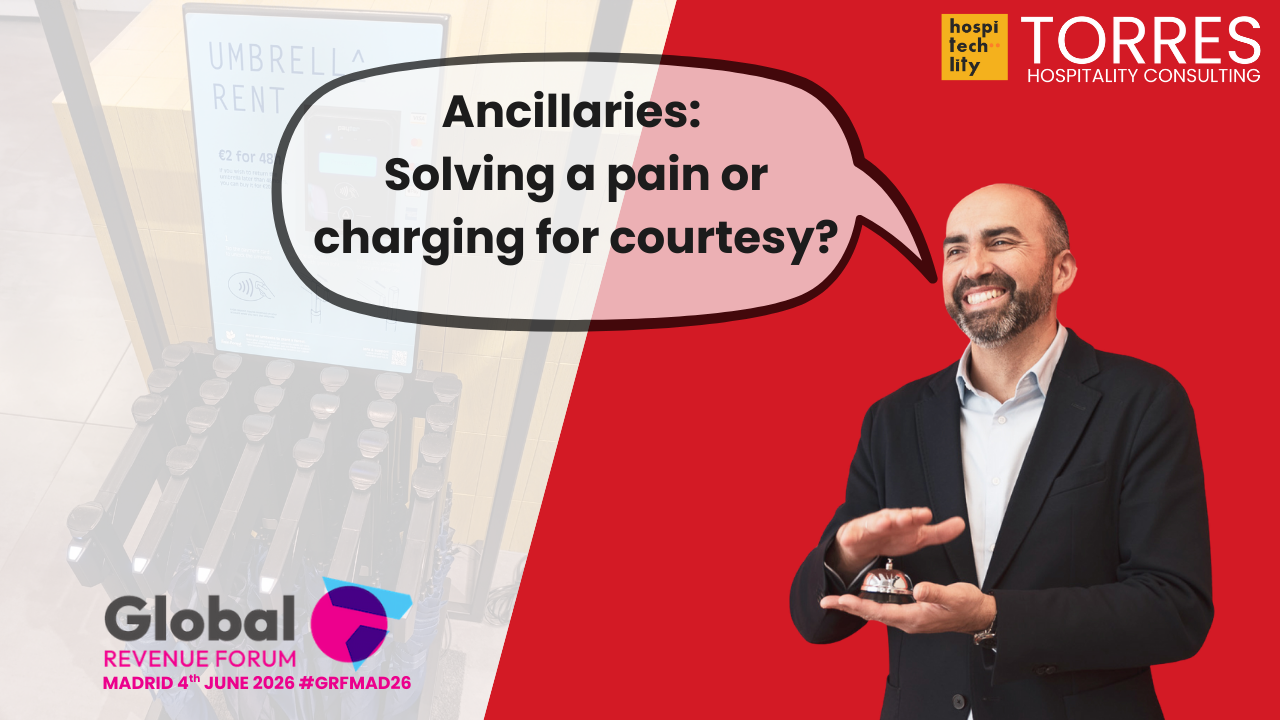
The second example comes from a recent personal experience at a hotel in Amsterdam. The LinkedIn post (with over 15,000 views and more than 100 interactions) demonstrates that this is a sensitive issue: an automated umbrella rental system where you swipe your card and pay €2 for 48 hours (approximately the average length of a stay), and if you keep it, it costs €20.
The comments were exactly what you'd expect, and that's the key. The umbrella isn't just a product; it's a brand moment.
The voices of luxury said "this won't work: just lend it out" (or at most, manage it with notes in the PMS / deposit logic).
Lifestyle/premium operators noted that it can work when it fits expectations and is frictionless.
Others reframed it as sustainability: fewer cheap umbrellas bought and thrown away, more sharing, less waste.
A broader "umbrella-as-a-service" model is also circulating in hospitality circles: you pay a small fee for 48 hours, return it through a tracked system, and the product is designed to last (sometimes with a sustainability hook like planting a tree).
Why it matters: This is the other side of the ancillary evolution: monetizing micro-amenities.
And micro-amenities are dangerous if they touch the very essence of hospitality. A guest's brain doesn't judge an umbrella the way it judges the snacks in the minibar. It judges it as a sign of care.
If it feels like helping someone → the guest smiles. If it feels like monetizing courtesy → the guest remembers it (and not in a positive way).
So… how far will the ancillary power go?
Further than most teams believe; and not just in volume, but in philosophy:
From "extras" to micro-products. From "additional services" to certainty, speed, and risk protection. From "upsells at reception" to an automated, embedded, one-click checkout.
The winners won't be the hotels or brands that charge the most for things. They'll be the ones that choose the right moments to monetize without damaging trust.
The ancillary line test (3 questions)
Before launching any new paid add-on, I would apply this quick filter:
Is the value exchange obvious in 5 seconds? If the guest needs a paragraph, you'll be buying complaints along with your revenue.
Does it reduce friction or create friction? Automation can be a gift… or a cold interaction if it replaces care.
Is it aligned with our segment's promise? Luxury sells "effortless care." Lifestyle might sell "pay-per-use convenience." Same product, completely different perception.
3 actions for this week
Audit your "grace moments." List 10 small items/services you currently offer (umbrellas, water, adapters, gym access, "sometimes" late checkout). Decide which ones define your brand (keep them free), which ones are expensive (deposit model), and which ones can be monetized without damaging your brand image.
Build a simple "attachment rate vs. complaint rate" dashboard. Each ancillary should be measured beyond revenue: % of attachment, margin, refunds, and complaint/sentiment signals. If you can't measure the downside, you'll only see the upside… until it's too late.
Move an ancillary service upstream, but do it ethically. Choose a single add-on that genuinely solves a pain point and try offering it earlier in the customer journey (pre-arrival, booking engine, app). Transparent pricing, clear value, one-click purchase.