
Two-hour lines for groceries in Tribeca? That's not inflation. it's aspiration.
When Meadow Lane opened its doors in New York, people queued for hours to grab kale chips, collagen jello, and a side of clout. But let's be clear: they weren't just there for the produce. They were there for the experience. The story. The vibe. And hotels, if you're not taking notes yet, you should be.
Because what happened on that street corner in Tribeca isn't just a retail story. It's a masterclass in creating emotional demand, and more importantly, a blueprint for boosting ancillary revenue in hospitality.
Selling more than smoothies
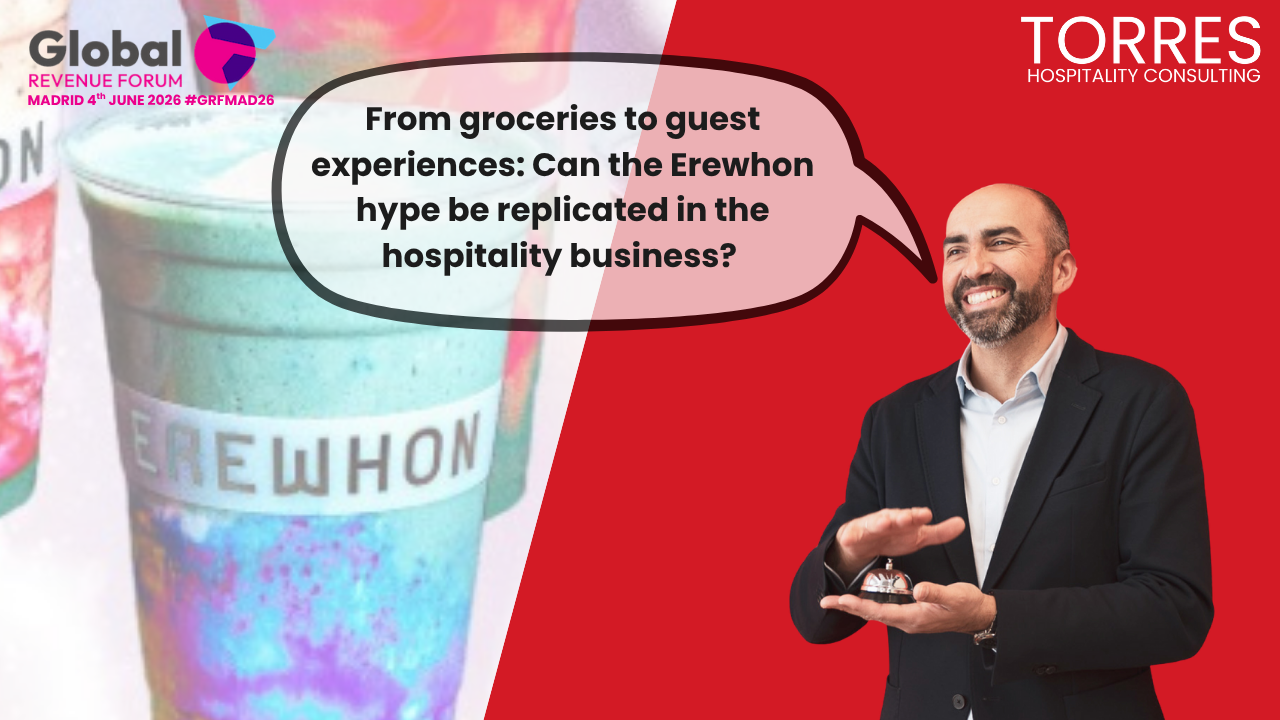
Let's call this what it is: the Erewhon Effect 2.0. It's not about the price of the smoothie. It's about what drinking that smoothie says about you. The newly opened Erewhon NYC replicated this to a tee, with aesthetic interiors, “it” tote bags, and storytelling that made customers feel like they were part of something bigger than a shopping trip.
And here's the kicker: the actual spend wasn't outrageous. Around $25 per visit. But multiplied by hype and repeat visits? That's serious revenue.
Hotels, especially those in urban or lifestyle segments, are perfectly placed to jump on this. We have the space, the foot traffic, the guest base; and we certainly have the need to diversify revenue beyond rooms. So what if we flipped the script?
- What if your lobby café didn't just sell croissants, but collaborated with local wellness influencers to offer limited-run “beauty bowls” or adaptogenic lattes?
- What if your rooftop didn't just open at night, but became a daylight destination for Gen Z “coffee party” crowds?
- What if your minibar wasn't stocked with dusty peanuts, but with Instagrammable, artisanal, locally-sourced snacks from a partner brand?
It's not about food. It's about FOMO.
Fandom = Revenue
The real genius behind Meadow Lane was how it was built fandom before it built footfall. By the time the doors opened, hundreds of people already felt like they knew the brand. And when the store opened, they showed up like it was a concert.
Hotels rarely do this, yet we have the perfect backdrop. A renovation? That's content. A chef trying a new menu item? That's content. A front desk team doing TikTok dances with the housekeeper? Okay, maybe not every hotel…but still, that's content.
What if we treated every F&B launch, spa update, or lobby redesign like a Netflix series, not just a press release?
You're not just building awareness; you're building anticipation. And people pay more for things they anticipate.
Clean aesthetics, clean dopamine
The design of Meadow Lane also deserves credit. It wasn't just clean. It was clean. Natural light, warm wood tones, beige everything, curated everything. Guests weren't just shopping; they were soaking in a sensory brand universe.
Now imagine your hotel breakfast lounge looking like that.
Design sells. Wellness sells. And the two together? Jackpot. People are willing to pay €20 for a coffee + DJ + yoga combo in a sunlit room, instead of €30 for a cocktail in a dark nightclub. That's not a small shift—it's a structural change in leisure consumption, and it's directly tied to what we now call “clean dopamine”: the thrill of exercise, aesthetics, and connection, without the hangover.
Hotels have the chance to host these new experiences. Think:
- early-morning coffee parties in unused event space.
- Collabs with healthy snack brands or fitness apps.
- Daytime events with curated design, music, and movement.
- Wellness-themed pop-ups in your lobby or spa reception.
If you wait for guests to come only after 6pm, you're leaving money (and community) on the table.
What does this mean for ancillary revenue?
Let's break it down.
The Erewhon model works because it nails three revenue levers:
- Low ticket, high frequency: It's easy to spend €25 twice a week versus €100 once a month.
- High-margin products: Smoothies, salads, snacks, all with healthy markups.
- Built-in virality: Social media does your marketing if the experience is designed for it.
Hotels can do this too. Our traditional revenue streams (spa, F&B, meeting rooms) are often underutilized during the day. But imagine turning that idle time into an experience factory:
- A hotel shop curated like Erewhon, with limited-edition goods from local artisans.
- Wellness brunch collabs with fitness instructors, followed by rooftop stretching sessions.
- Spa treatments that double as content opportunities, complete with branded robes and IG-worthy smoothie bars.
These aren't just cute ideas. They're margin-friendly, story-rich, and partnership-ready.
The Collab economy is waiting
You don't have to invent everything yourself. Look around. Your city probably has:
- A local fitness creator with 10k+ followers.
- A juice brand looking for exposure.
- A ceramics maker who dreams of seeing their cups on a hotel breakfast table.
Bring them in. Let them use your space. Split the revenue. Leverage their audience. And make your hotel part of their story.
Guests don't just want a place to sleep anymore. They want a place to belong, to experience, to share. And if you give them the vibe they're looking for, they'll spend. Again. And again.
Hotels, your “Erewhon moment” is waiting. The question is: are you ready to open the doors?